
Words You Say Out Loud Stick Better
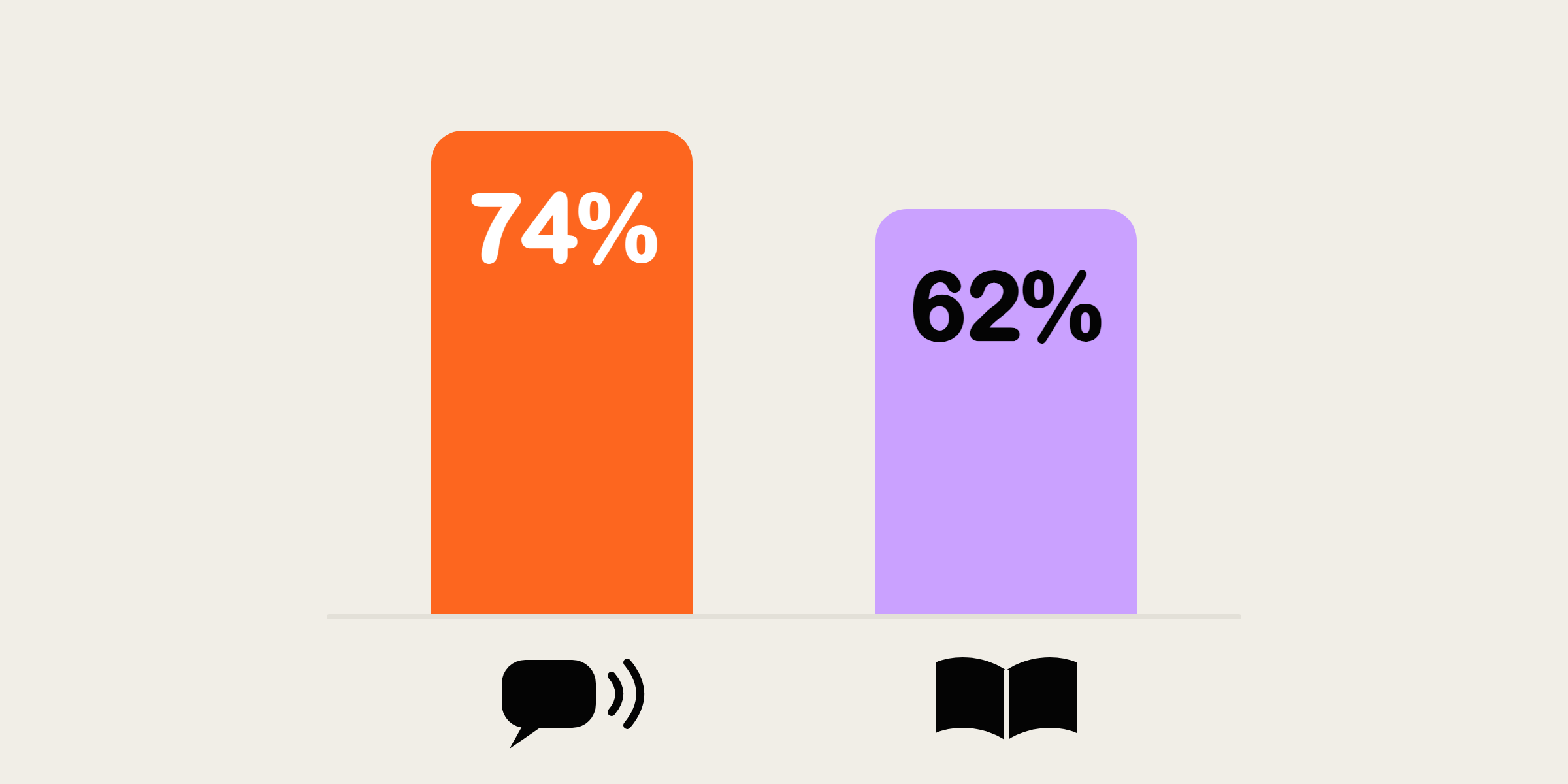
Words read aloud are remembered better than words read silently: 74% vs 62% in one study. Here's why your own voice helps you remember.
 Tal Ezra Nov 17, 2026 · 1 min read

You can see a new word five times on a flashcard, or say it out loud once, to someone. Which one sticks?
Psychologists wanted to know if saying a word helps you remember it. They gave people a list of words and asked them to read some aloud and some silently. Then they tested which ones people remembered better.
The words read aloud won: people recognised 74% of them on the test, and only 62% of the words they had read silently (MacLeod et al., 2010).
Researchers call this the production effect. When you say a word, your memory gets two extra things: you moved your mouth, and you heard your own voice. Even hearing a recording of yourself works better than hearing someone else say the word (Forrin and MacLeod, 2018). Early studies suggest it helps with words in a new language too (Brown and Roembke, 2024; Icht and Mama, 2022).
LingoLooper is built around speaking. In your next Loop, when you chat with your neighbour or order from the barista and a new word comes up, say it out loud. Your memory will thank you.
In short
Words you say out loud stick better than words you only read. Hearing your own voice helps too.
More posts
All posts
Practical English Speaking Practice for Work and Relocation
You understand a lot of English, but job interviews, small talk at work and calls with your landlord still make you freeze. Here are the phrases to practice and a two-week plan.

AI Speaking Practice vs a Language Tutor: Which Do You Need?
AI speaking practice and a human tutor do different jobs. Here's an honest comparison of cost, feedback, pressure and structure, and how to combine them.

How to Practice Speaking German When Everyone Switches to English
You live in Germany, you're learning German, and every time you try it, people answer in English. Here's why it happens and how to get the speaking practice you need anyway.
